
Last Updated: October 26, 2026
Quick Summary
BLACK HAT PEPTIDE COMPANY is our top Luxara Labs alternative for researchers who need independent batch reports and manufacturer documentation alongside a direct ordering path. It publishes batch reports for selected products, runs live inventory checks before checkout, and prices without reseller markup. Six further suppliers are ranked by documentation strength first and purchasing convenience second.
- Our vendor comparison method weights documentation depth and testing transparency highest of five criteria.
- A certificate with no lot number is a marketing document, not a batch record.
- Divide total price by total milligrams, then adjust for purity and landed cost.
- A $60 vial of 5 mg works out to $12.00 per milligram.
- File supplier documentation per lot, not per order, since shipments can hold multiple batches.
Table of Contents
- Why Researchers Are Searching for a Luxara Labs Alternative
- How We Evaluated These Alternatives: Our Vendor Comparison Method
- 7 Luxara Labs Alternatives Ranked for Research Use
- The Research Peptide Supplier Checklist Every Lab Should Use
- Peptide Batch Testing and Certificates of Analysis: What to Verify
- Research Peptide Supplier Documentation: A Purchasing and Records Checklist
- Research Peptide Pricing Comparison: Reading Cost per Milligram Correctly
- Requesting Batch Documentation From BLACK HAT PEPTIDE COMPANY
- Frequently Asked Questions
Why Researchers Are Searching for a Luxara Labs Alternative
A Luxara Labs alternative matters because supplier continuity is a research problem, not just a purchasing one.
Most researchers searching for a Luxara Labs alternative are protecting a study timeline, not chasing a cheaper vial. A mid-protocol supplier change means new lot numbers, new certificates, and fresh internal review.
Below: seven suppliers worth vetting, the criteria we use, and the paperwork that should decide your choice.
How We Evaluated These Alternatives: Our Vendor Comparison Method
Our vendor comparison method scores each supplier on five weighted criteria: documentation depth, testing transparency, pricing clarity, ordering reliability, and researcher support. Documentation and testing carry the most weight because they are the hardest claims to verify and the easiest to fake.
Ranking by price alone is a common mistake: price per milligram tells you little if the certificate cannot be matched to the lot in your hand.
We also flag what we could not verify: several vendors publish testing claims through third-party comparison pages rather than their own documentation.
| Criterion | What We Check | Weight |
|---|---|---|
| Documentation depth | COA availability, lot matching, manufacturer records | High |
| Testing transparency | Independent lab reports, HPLC data, purity statements | High |
| Pricing clarity | Published pricing, cost per milligram, markup structure | Medium |
| Ordering reliability | Live inventory, payment flow, fulfillment tracking | Medium |
| Researcher support | Responsiveness to documentation requests | Medium |
7 Luxara Labs Alternatives Ranked for Research Use
The seven suppliers below are ranked by documentation strength first and purchasing convenience second. Each entry states what the supplier publishes, what we could verify, what we could not confirm, and which researcher profile it fits. Treat every entry as a starting point for your own qualification, not a permanent grade.
A note on scope: none of these entries recommends using any compound in humans or animals. Every supplier below sells for laboratory research only, and the ranking reflects procurement and documentation factors, not safety or efficacy.
1. BLACK HAT PEPTIDE COMPANY
BLACK HAT PEPTIDE COMPANY is our top pick for researchers who want independent batch reports and manufacturer documentation alongside a direct ordering path.
Ordering is deliberately simple: select products or supplies, complete checkout, reserve available inventory, pay immediately, and receive tracking after shipment. Discreet fulfillment is standard.
Best for: Labs that need batch documentation and live stock accuracy in one place. Skip if: You require GMP-grade certification, which is outside what we publish.
2. Purgo Labs
Purgo Labs appears in third-party supplier comparisons as an alternative to established vendors, with compounds described as COA-verified and pricing characterized as competitive. A discount code circulates in comparison writeups.
What we could verify: the vendor is named in comparison coverage and markets COA-verified compounds.
Best for: Researchers comparing COA-related claims across vendors. Skip if: You need published per-product pricing before contacting a supplier.
3. Core Peptides
Core Peptides is named in vendor comparisons weighing third-party lab testing, COA transparency, and community reviews.
What we could verify: the vendor is discussed in comparison coverage referencing testing and COA transparency. What we could not verify: supplier-specific analytical reports published upfront.
Best for: Researchers who want review history as one input among several. Skip if: You need supplier-specific test details published upfront.
4. Oath Research
Oath Research shows up in comparisons built around lab testing and COA transparency. Presence in a comparison article is not evidence of testing standards.
What we could verify: the vendor is named in testing- and COA-focused comparison coverage. What we could not verify: the underlying analytical reports.
Best for: Researchers assessing a supplier against testing criteria. Skip if: You need verified documentation before first contact.
5. Ameano Peptides
Ameano Peptides is included in comparison coverage considering third-party lab testing and community reviews. It is a reasonable shortlist name, provided you run your own documentation check.
What we could verify: the vendor appears in comparison coverage referencing testing and reviews. What we could not verify: supplier-specific test data, which the sources we reviewed do not publish.
Best for: Researchers building a broader shortlist. Skip if: You need published, supplier-specific test data.
6. SwissChems
SwissChems is identified as a research-peptide vendor in comparisons discussing pricing tiers, payment methods, and shipping profiles. Those factors matter for procurement but say nothing about purity.
What we could verify: the vendor is discussed in comparison coverage covering pricing, payment, and shipping. What we could not verify: product-level testing documentation.
Best for: Researchers comparing purchasing and shipping logistics. Skip if: Product-level testing documentation is your first priority.
7. Amino Asylum
Amino Asylum rounds out the list as a vendor named in research-peptide comparisons covering pricing and payment methods. It is worth a documentation request, not an automatic order.
What we could verify: the vendor is named in comparison coverage covering pricing and payment. What we could not verify: product-level testing information.
Best for: Researchers comparing payment and pricing structures. Skip if: You need product-level testing information upfront.
The Research Peptide Supplier Checklist Every Lab Should Use
A research peptide supplier checklist should cover documentation, testing, identity verification, shipping conditions, and support responsiveness before any order. Run every candidate through the same list so the comparison stays fair.
Here is the checklist we would use:
- Certificate of analysis available before purchase
- Lot number on the certificate matches the vial
- Independent analytical laboratory named, not just "third-party tested"
The FDA guidance on laboratory practices is a useful reference for the record-keeping standards research labs are held to internally, even when supplier documentation falls outside that framework.
Peptide Batch Testing and Certificates of Analysis: What to Verify
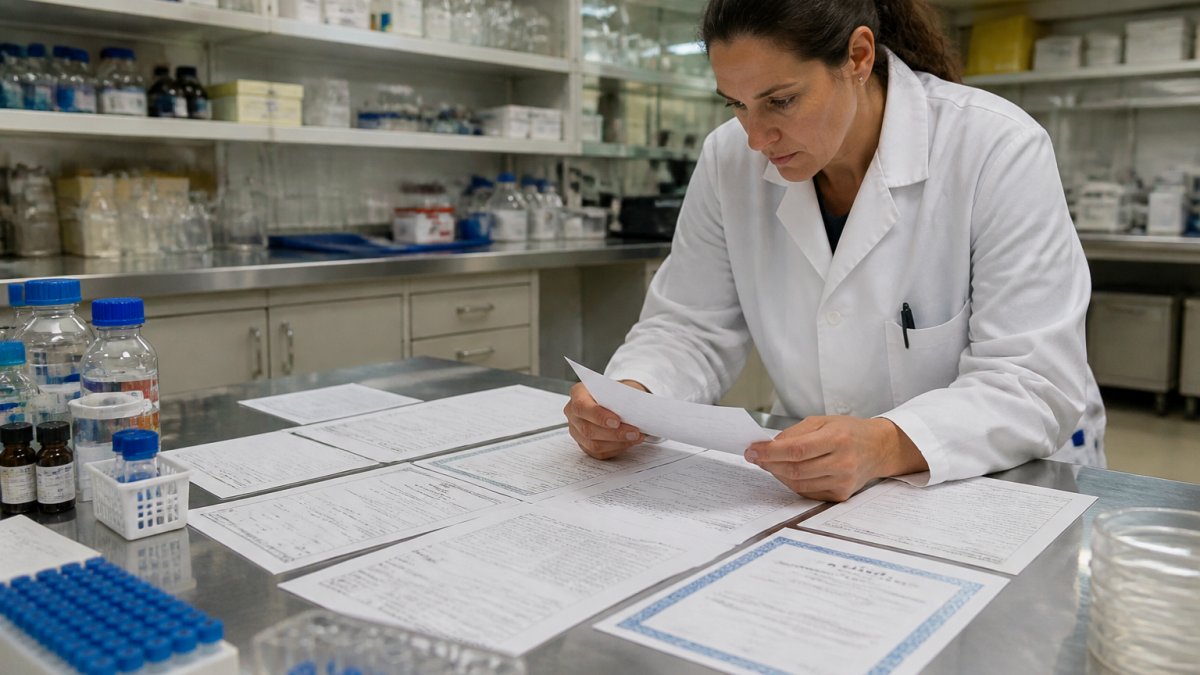
Peptide batch testing confirms a specific production lot's identity, purity, and measured content through independent analysis; a certificate of analysis records those results. Batch verification only means something when the certificate and the vial share identifiers.
Verify these fields in order:
- Product name and strength on the certificate match the label
- Sample and lot identifiers match your vial
- Identity confirmed by a named method
- Purity percentage from HPLC analysis, with the chromatogram attached
- Measured content versus label claim
- Testing laboratory named and independent of the seller
You can view available Black Hat independent laboratory reports and manufacturer-supplied certificates of analysis for selected research products, and learn how to compare product name, strength, sample identifiers, identity, purity and measured content on a certificate of analysis before you accept any vendor's testing claim.
Watch out: a certificate with no lot number is a marketing document, not a batch record. If it cannot be tied to your vial, it verifies nothing.
Research Peptide Supplier Documentation: A Purchasing and Records Checklist
Research peptide supplier documentation should be filed per lot, not per order, because a single shipment can contain multiple batches. Keep the certificate, order record, and receiving notes together.
For each purchase, retain:
- Certificate of analysis for the exact lot received
- Order confirmation and payment record
- Shipping and cold-chain handling documentation
For broader context on analytical testing standards, the United States Pharmacopeia publishes reference material on identity and purity testing that many labs use as a benchmark.
Research Peptide Pricing Comparison: Reading Cost per Milligram Correctly
Research peptide pricing comparison only works when you normalize by mass, adjust for purity, and account for batch size and shipping.
The basic calculation is straightforward: divide total price by total milligrams.
Three adjustments separate a real comparison from a sticker-price sort:
- Purity adjustment. If one certificate reports 98% purity and another reports 95%, the effective cost per milligram differs even at the same sticker price. Divide the cost per milligram by the stated purity fraction to compare like-for-like, and confirm the purity figure applies to the same lot you are buying.
- Batch size and fill. Confirm the labeled mass, not just the vial size. A '10 mg' vial and a '10 mg fill' are not always the same claim, and measured content versus label claim is a field you should read on the certificate.
- Landed cost. Add shipping, cold-chain handling fees, and payment processing costs. A supplier with free shipping on $200+ product and supply subtotals can beat a lower-priced competitor once shipping is included, and cold-chain handling fees belong in your comparison from the start.
What this calculation cannot tell you: whether the certificate behind either vial is genuine or lot-matched.
Our own pricing is published transparently without reseller markup, so you can run that calculation directly rather than requesting a quote.
Requesting Batch Documentation From BLACK HAT PEPTIDE COMPANY
Requesting batch documentation starts before checkout: confirm the product, ask which lot is in stock, and request the matching certificate. Our live inventory checks show what is actually available, so the lot you discuss is the lot you receive.
To order, follow the step-by-step ordering process: select products or supplies, complete checkout, reserve available inventory, pay immediately, and receive tracking after shipment. If you need documentation before committing, contact us with questions about products, orders, payment, inventory, shipping, and fulfillment and we will point you to the relevant batch reports.
You can also browse research products with live inventory checks, domestic fulfillment, and free shipping on $200+ product and supply subtotals to see what is currently in stock.
Frequently Asked Questions
What should researchers look for in a research peptide supplier?
Start with documentation, not price. A supplier should provide a certificate of analysis for the specific batch you receive, with HPLC purity data and a lot number that matches the vial. Ask whether testing was done by an independent analytical laboratory or in-house, and whether the full report is available before purchase. Beyond testing, check that inventory shown on the site reflects real stock, that shipping conditions are stated, and that support can answer technical questions directly. A research peptide supplier checklist that covers testing, documentation, stock accuracy, and responsiveness will filter out most weak vendors quickly.
How can researchers verify a peptide batch report?
Match the lot number on the vial to the lot number on the certificate of analysis, then check the report's testing date, method, and purity percentage. Look for the name of the analytical laboratory that ran the test and whether the report shows raw chromatogram data rather than a summary line alone. If a supplier cannot produce a batch-specific COA or the lot numbers do not align, treat the purity claim as unverified. Peptide batch testing and certificates of analysis are only useful when they tie to the exact material in your hands, so verification is a records exercise, not a trust exercise.
How do researchers compare peptide suppliers on price fairly?
Convert every quote to price per milligram before comparing, because vial sizes vary widely between vendors and a larger vial can look cheaper while costing more per milligram. Include shipping, cold-chain handling, and any minimum order quantity in the total. A research peptide pricing comparison should also note whether the price includes batch documentation, since a vendor that charges extra for COAs is not actually cheaper. Ask for current pricing directly from each supplier's website, since listed prices change and third-party roundups often lag behind.
What documentation should a research peptide supplier provide?
At minimum: a batch-specific certificate of analysis with purity and identity data, the analytical method used, the testing laboratory's name, and a lot number matching the shipped vial. Manufacturer documentation matters too if the material is resold rather than produced in-house. For procurement at a CRO or academic lab, you may also need a specification sheet, safety data sheet, and a stated storage and shipping profile. Research peptide supplier documentation should arrive with the order or be downloadable before checkout, not on request after a problem appears.
Can research peptides be sold legally, and does that affect supplier choice?
Research peptides are generally sold for laboratory research use only, not for human consumption, and labeling should state that clearly. Legality depends on the specific compound and how it is marketed, so researchers should confirm their institution's policies and any applicable federal or state requirements before ordering. A supplier that separates research information from medical claims, labels products research-use-only, and provides batch documentation is easier to work with during institutional review. Treat any vendor making therapeutic claims as a documentation risk rather than a convenience.
The hardest part of replacing a supplier is not finding names. It is proving that the new source documents its batches to the standard your study requires. BLACK HAT PEPTIDE COMPANY publishes independent batch reports and manufacturer documentation, runs live inventory checks so stock claims hold up, and keeps pricing transparent without reseller markup. Get started with BLACK HAT PEPTIDE COMPANY and qualify your next supplier on paperwork, not promises.
